Behind the Story: Hope Beneath the Earth — The Chilean Miners’ Rescue
Finding voices available in your browser…

For sixty-nine days, 33 miners waited beneath Chile’s Atacama Desert while families, drill crews, doctors and engineers attempted a rescue without precedent. Explore the documented history behind the collapse, survival, drilling operation and Fénix capsule.
For sixty-nine days in 2010, a remote mine in Chile’s Atacama Desert became the centre of the world’s attention. Beneath hundreds of metres of rock, 33 men waited in heat and uncertainty. Above them, families, drill crews, doctors, engineers and government officials worked against time.
The ending is well known: every miner came out alive. Yet the complete story is larger than the final images of the rescue capsule reaching the surface. It includes a troubled mine, seventeen days without contact, disciplined survival underground, repeated drilling failures, international cooperation and a rescue plan that had to be invented while the world watched.
This is the documented history behind the SOAR devotional “Hope Beneath the Earth.”
1. The Mine Beneath the Atacama
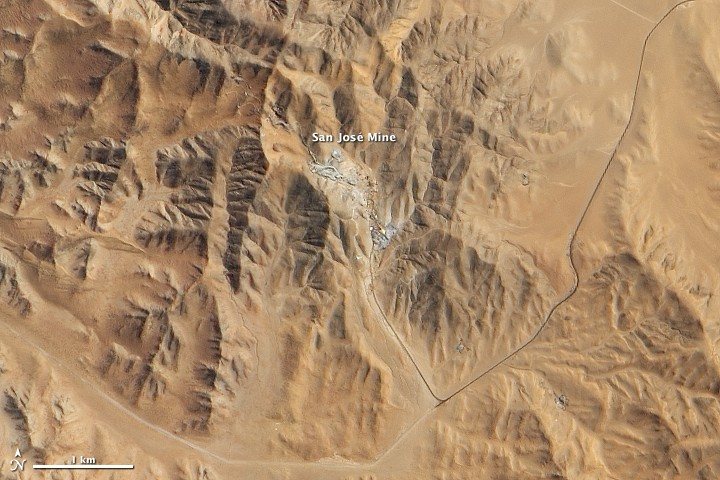
The San José mine lies near Copiapó in northern Chile, within the Atacama Desert—one of the driest places on earth. The old copper-and-gold mine descended through a network of ramps and tunnels cut into hard, unstable rock.
Mining is central to Chile’s economy and national identity, but the San José operation had raised serious safety concerns before 2010. Chilean officials later examined how the mine had been inspected and reopened after earlier accidents. This background matters because the rescue should not turn a preventable workplace danger into a romantic adventure. The courage and ingenuity that followed were real, but so were the questions about why the men were placed at risk.
On Thursday, 5 August 2010, a massive section of rock collapsed inside the mine. The fall blocked the main access ramp and separated the day shift from the surface. Thirty-two Chileans and one Bolivian—33 men in all—were trapped roughly 700 metres, or about 2,300 feet, below ground.
2. Seventeen Days Without an Answer
In the first hours, nobody above ground knew whether the miners had survived. Attempts to reach them through the mine’s passageways failed because the collapse had sealed the route. Rescue teams then began drilling narrow exploratory boreholes, trying to strike a small underground target through hundreds of metres of rock.
The task demanded extraordinary precision. Rock layers could deflect a drill away from its intended path. Existing maps were imperfect, and each unsuccessful borehole consumed time. Families established a settlement near the mine entrance that became known as Camp Hope. They waited through rumours, setbacks and days of silence while insisting that the search continue.
Underground, the men made their way to an emergency shelter. The shelter contained only a limited supply of food meant for a much shorter emergency. Shift foreman Luis Urzúa helped organise the group and impose strict rationing. Contemporary accounts describe tiny portions of tuna, milk and other supplies shared at long intervals.
The men divided responsibilities, maintained parts of the mine, mapped their location and tried to preserve order. NASA later noted that they had organised themselves into working groups even before contact was established. Their survival depended upon cooperation as much as individual endurance.
3. The Note That Changed Everything
On 22 August, the eighth exploratory drill finally reached an area close to the shelter. The miners heard it and prepared a message. When the drill returned to the surface, rescuers discovered a handwritten note attached to it:
“Estamos bien en el refugio los 33.”
“We are well in the refuge, the 33.”
The message confirmed what families had prayed to hear for seventeen days: all 33 men were alive. Chilean President Sebastián Piñera displayed the note as celebration spread through Camp Hope and across the country.
Discovery, however, was not rescue. The first borehole was only wide enough to carry supplies and communication lines. The men were alive, but there was still no passage large enough for a human being. Early estimates suggested that creating one might take until Christmas.
4. A Lifeline Through a Narrow Tube
Engineers widened and secured small boreholes that connected the miners with the surface. Long cylindrical supply carriers—nicknamed palomas, Spanish for “doves”—carried water, carefully controlled food, medicine, clothing, letters, lights and communication equipment underground.
Nutrition had to be restored gradually because the men had survived on so little food. Medical teams monitored their condition, while psychologists helped manage the pressures of confinement, uncertainty and worldwide attention. Telephone and video links allowed contact with families and rescue coordinators, but communication also had to be structured so that emotional strain did not overwhelm the group.
Life underground developed a routine. Areas were assigned for sleeping, work, exercise, worship and sanitation. The men assisted the rescue by clearing falling rock and preparing the receiving area for drills. They were not passive passengers waiting for others to act; they became participants in their own rescue.
5. Three Plans and One Objective
Chile did not rely on a single route. Separate teams pursued parallel drilling strategies known as Plan A, Plan B and Plan C. Each used different equipment and approached the underground workings in a different way. Running several plans at once increased cost and complexity, but it also reduced the danger that one technical failure would end the rescue.
Plan B used a Schramm T130 drill normally associated with water-well work. Rather than beginning with a full-size shaft, the team enlarged an existing pilot hole in stages. The drill had to follow a demanding path through abrasive rock while the trapped miners removed debris from below.
On 9 October, after 65 days underground, Plan B broke through into a chamber accessible to the miners. The shaft still had to be inspected and partially lined before anyone could travel through it, but the physical route to freedom had finally been created.
6. Help from Beyond Chile
The operation remained Chilean-led, but specialists, companies and equipment came from several countries. The response brought together mining knowledge, drilling technology, medical care, logistics and engineering under intense public scrutiny.
At the Chilean government’s request, NASA sent two physicians, a psychologist and an engineer to the site. Their experience with astronauts living in confined, hostile environments informed recommendations about nutrition, sleep, exercise, medical monitoring and psychological support.
NASA engineer Clinton Cragg also helped develop suggested requirements for the rescue capsule. NASA’s records emphasise that Chilean naval engineers built the capsules; the agency’s contribution was technical advice drawn from human spaceflight and safety engineering. The distinction matters: the rescue succeeded through cooperation, not through one outside organisation arriving with a finished solution.
7. The Fénix Rescue Capsule
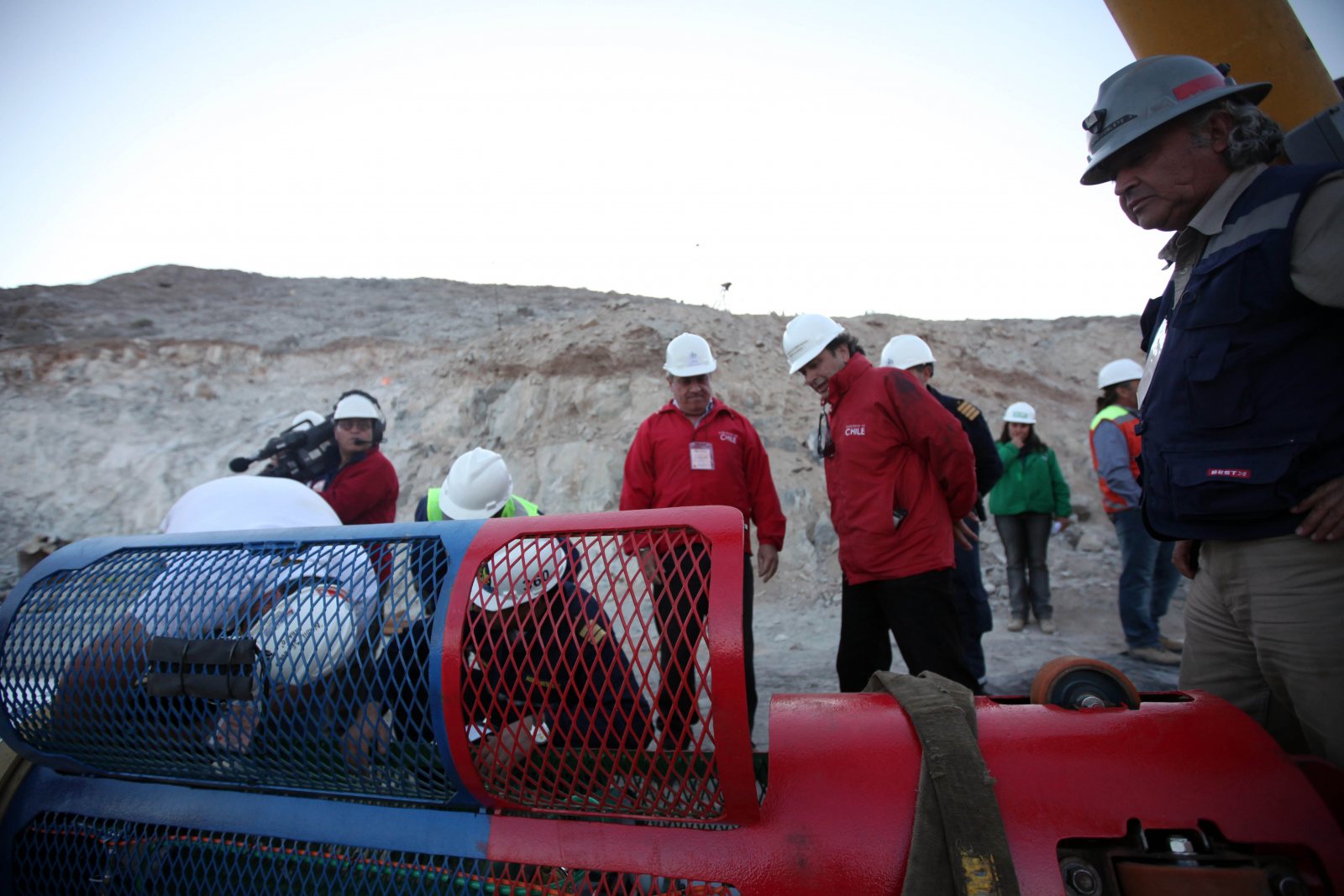
Chilean Navy engineers designed a narrow, one-person capsule named Fénix—“Phoenix”—after the legendary bird that rises from ashes. The capsule needed to fit inside a shaft only a little wider than a person while protecting its passenger during an ascent of more than 600 metres.
The design included exterior guide wheels to reduce friction, an emergency oxygen supply, communication equipment and a lower escape hatch. A miner could secure himself inside, remain in contact with the surface and be monitored during the journey upward.
Several capsules were built for testing and operation. Fénix 2 became the capsule used for the rescues. Each ascent carried not only a miner but the result of weeks of drilling, planning, fabrication, medical preparation and repeated testing.
8. The Final Rescue
On the night of 12 October 2010, rescue worker Manuel González descended through the shaft to prepare the men. Shortly after midnight on 13 October, Florencio Ávalos became the first miner lifted to the surface. His emergence proved that the capsule, shaft and winching system could complete the journey safely.
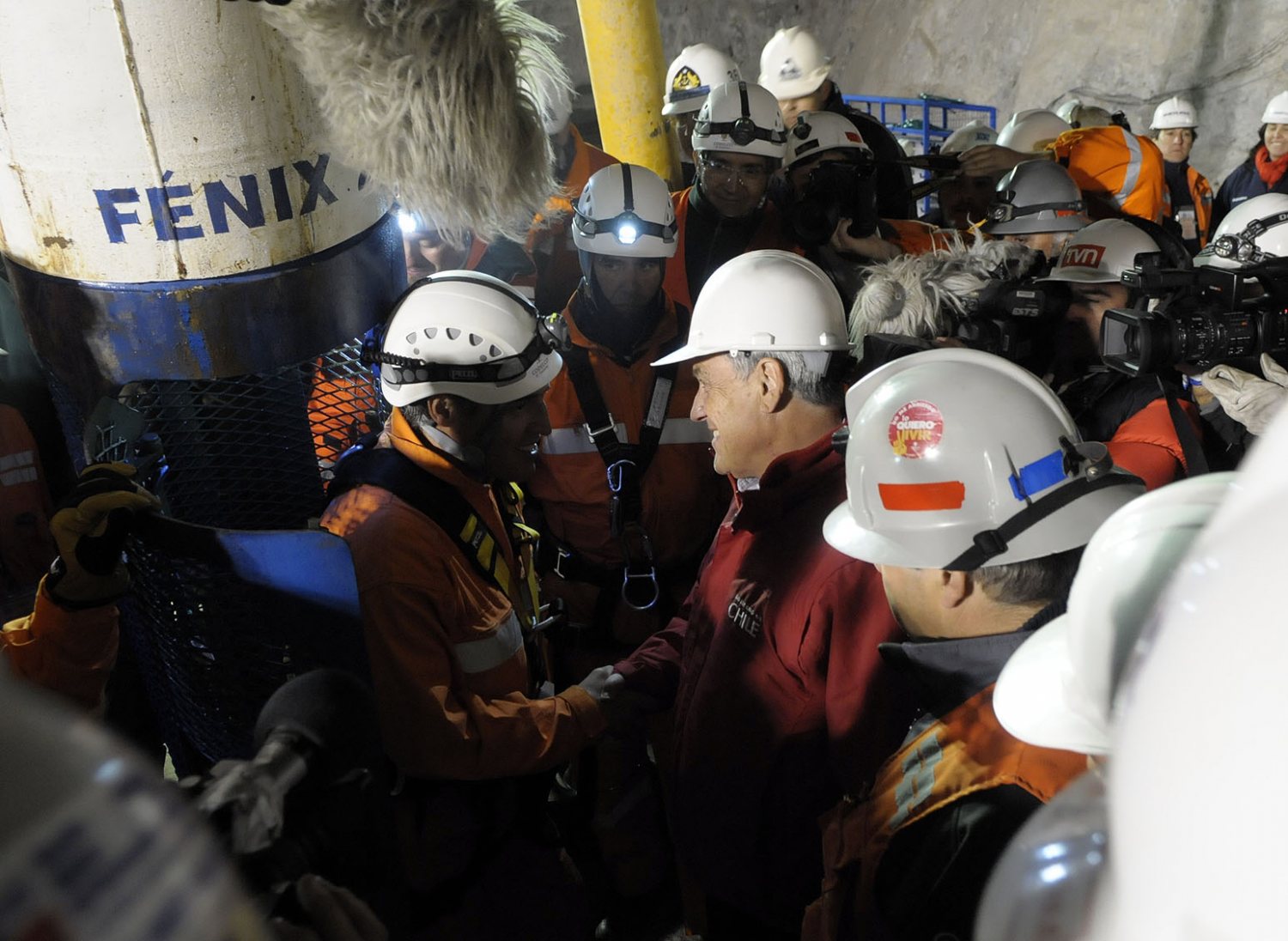
One after another, the miners entered Fénix 2. Each ascent took roughly fifteen minutes, followed by medical assessment and reunion with family. As confidence grew, the operation moved faster than expected.
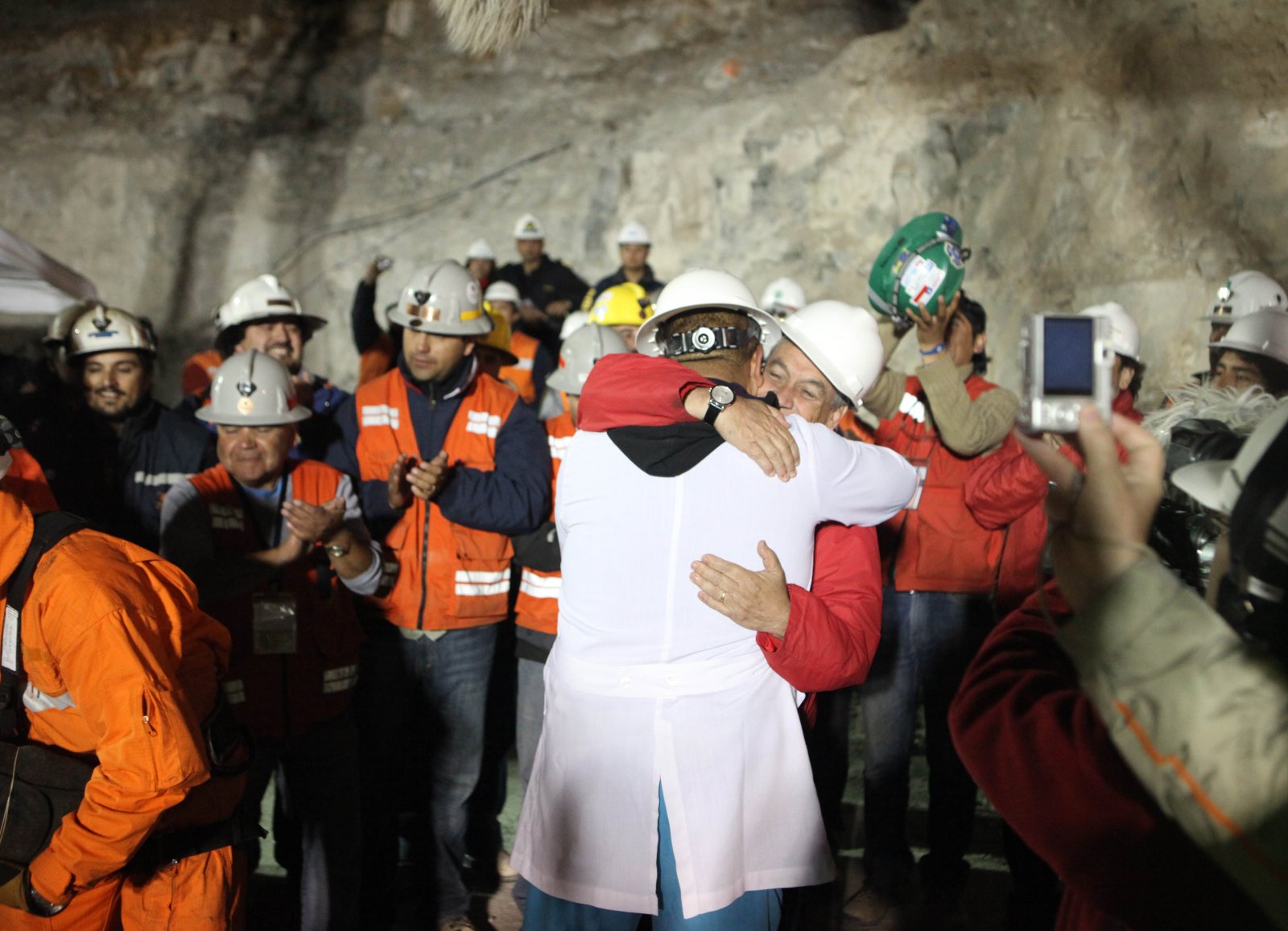
Luis Urzúa, the shift foreman who had helped organise the men during the first desperate days, was the last miner to leave. All 33 were above ground after a rescue operation lasting about 22 hours. The rescue workers who had descended to assist them then returned to the surface, holding up a sign that declared the mission accomplished.
After 69 days underground, not one of the trapped miners had been lost.
9. Why the Rescue Worked
The outcome is sometimes described only as a miracle or only as an engineering triumph. The full history contains several kinds of strength working together:
- Persistence: exploratory drilling continued after repeated failures.
- Organisation underground: rationing, assigned duties and shared discipline helped the men survive.
- Families who refused to leave: Camp Hope kept attention fixed on the missing men.
- Parallel planning: several drilling strategies prevented the mission from depending on one uncertain route.
- International cooperation: Chile accepted specialised advice and equipment without surrendering leadership of the operation.
- Care for the whole person: nutrition, medicine, psychology, exercise and family communication were treated as parts of survival.
- Testing and preparation: the shaft, capsule and rescue sequence were examined before the final operation began.
Hope did not replace practical work. It sustained people while that work continued.
10. A Concise Timeline
- 5 August 2010: The San José mine collapses, trapping 33 miners.
- 5–21 August: Rescue teams search and drill exploratory holes without confirmed contact.
- 22 August: A drill reaches the miners; their handwritten note confirms that all 33 are alive.
- Late August: Supply and communication systems are established; long-term rescue drilling begins.
- 30 August–5 September: A NASA advisory team visits Chile and provides medical, psychological and engineering recommendations.
- September–early October: Plans A, B and C drill toward the underground workings while the miners assist from below.
- 9 October: Plan B completes the rescue shaft breakthrough.
- 12 October: The extraction operation begins.
- 13 October: All 33 miners are safely brought to the surface.
11. Beyond the Celebration
The successful rescue did not erase the mine’s safety history or the difficult years that followed for some survivors. Sudden fame could not automatically remove trauma, financial strain, damaged health or the memory of confinement. A complete telling therefore honours the rescue without pretending that every consequence ended when the capsule door opened.
The disaster also intensified debate about mine regulation, inspection and responsibility in Chile. Rescue is worthy of celebration; prevention remains the deeper obligation.
The physical artefacts preserved from the event—including a Fénix capsule displayed by the Smithsonian—continue to represent what coordinated human effort can accomplish. Yet the most enduring image may still be the small handwritten note: proof of life travelling upward before any visible path to freedom existed.
12. Connection to the SOAR Devotional
The companion devotional “Hope Beneath the Earth” draws its central lesson from the seventeen days before the note reached the surface and the many weeks before the capsule arrived:
God may be working beyond what we can see.
The miners could not watch the drill teams above them. Joseph could not see how God would use Pharaoh’s dreams to open the prison door. David waited in the pit before he could sing about established steps.
The history does not promise that every crisis will end in the same way. It shows why hope, wise action, community and perseverance matter when the outcome is still hidden. The first breakthrough may not be the final rescue, but it can be evidence that the story is still moving.
Read the SOAR devotional: Hope Beneath the Earth
Sources and Further Reading
- NASA History: Chilean Miners Rescue Oral Histories.
- NASA Earth Observatory: San José Mine, Chile.
- NASA Langley: Engineering Support for the Rescue.
- Smithsonian Magazine: The Capsule That Saved the Chilean Miners.
- The Guardian: All 33 Miners Rescued.
- Chile Ministry of Labour: San José Mine Inspection Record.