Behind the Story: Brother Andrew — God's Smuggler Behind the Iron Curtain
Finding voices available in your browser…
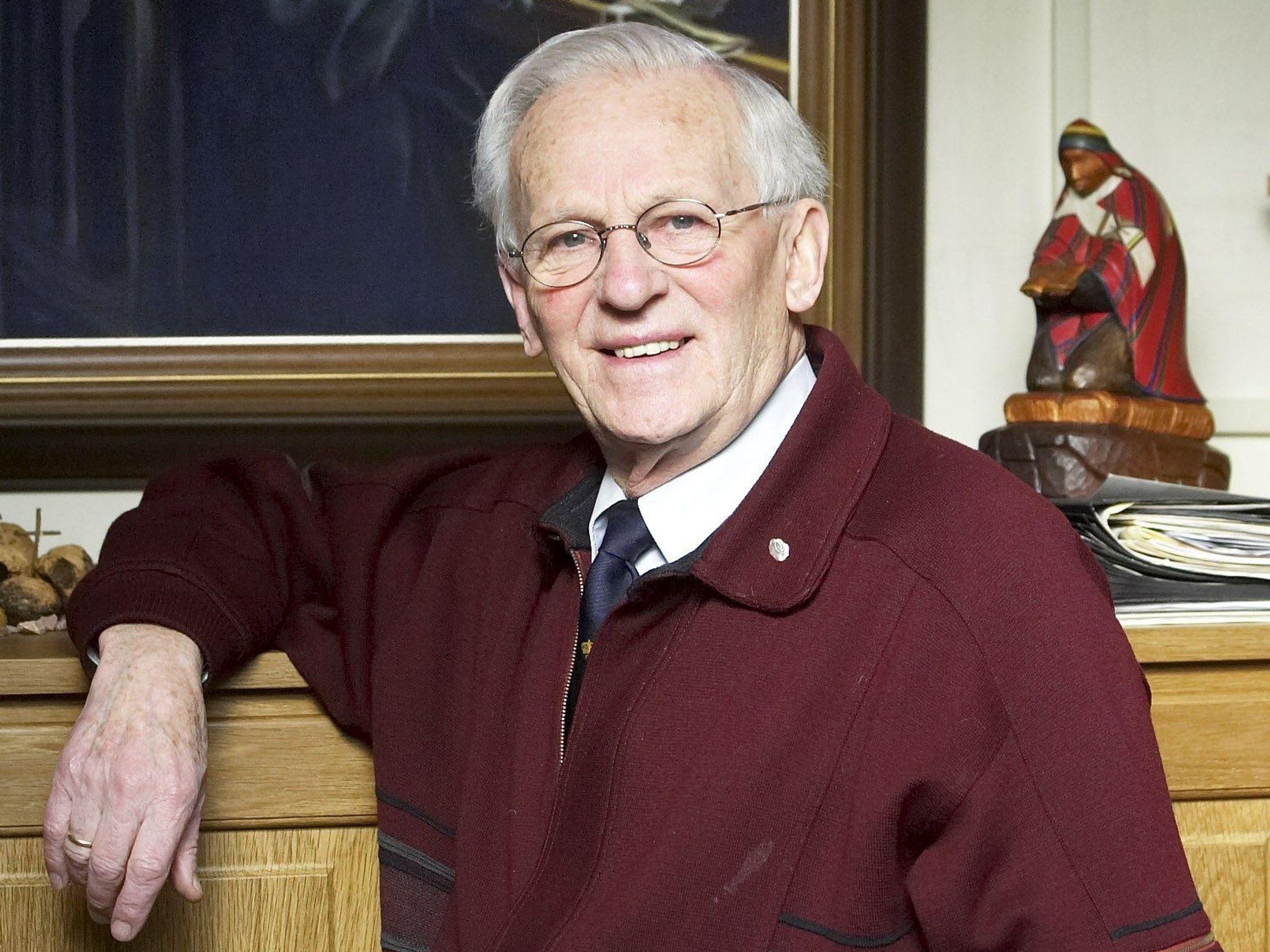
Behind guarded borders and Cold War secrecy, a Dutch missionary carried forbidden Bibles to isolated Christians. Discover the documented history, remembered border stories, setbacks, worldwide growth, and enduring legacy behind Brother Andrew's remarkable mission.
At a guarded frontier in Communist Europe, a small car waited beneath the gaze of customs officers. Its driver was a Dutch missionary travelling under the name Brother Andrew. Inside were Bibles and Christian books intended for believers who could not obtain them legally. A thorough search could end the journey before it began.
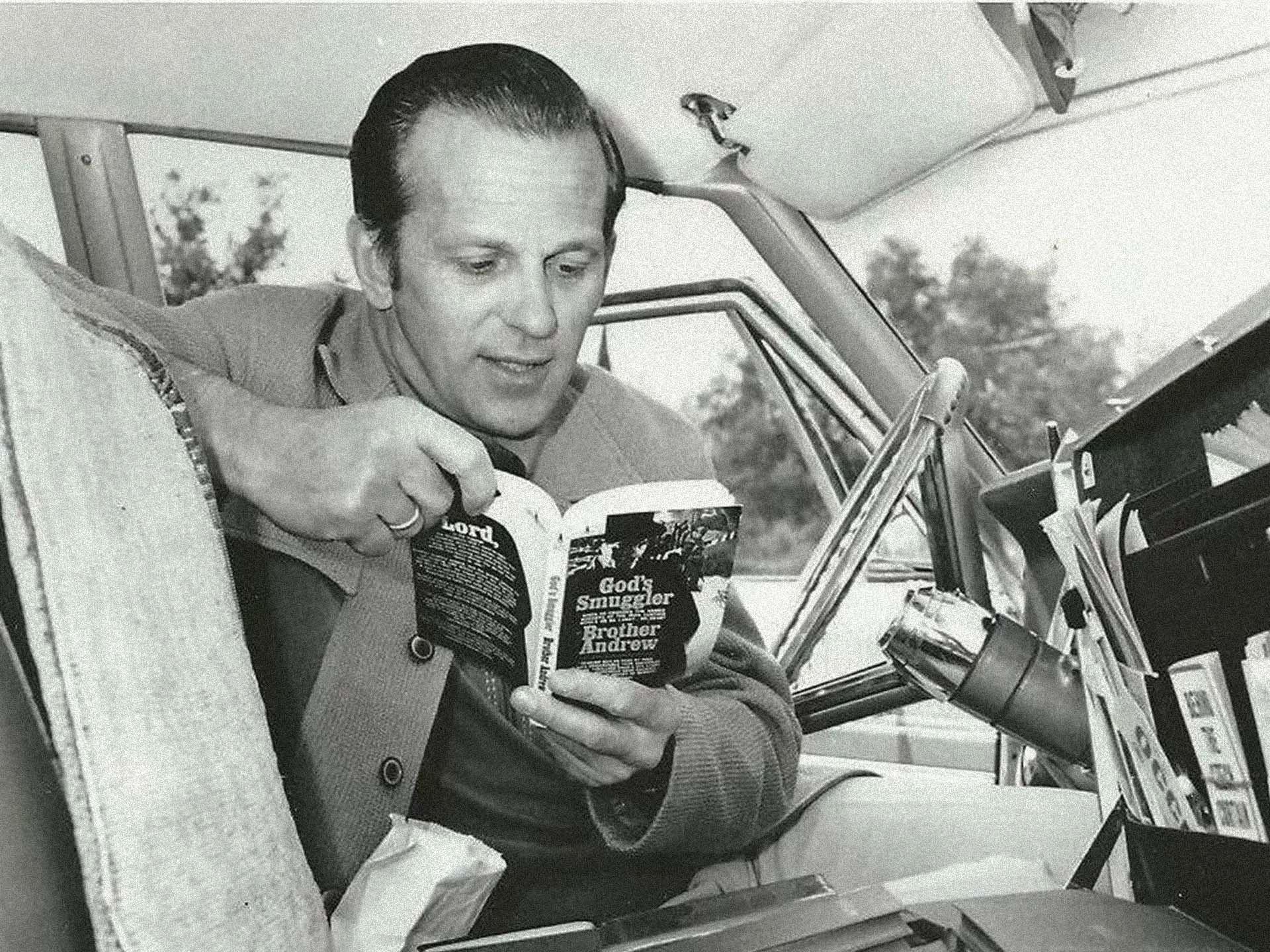
Millions of readers would later picture scenes like this through God's Smuggler, the autobiography published in 1967. The title followed Andrew for the rest of his life. It was memorable, almost cinematic, but the man himself repeatedly resisted the idea that he was a spiritual action hero. His purpose was simpler: find Christians who had been isolated by political borders, listen to what they needed, and help.
That purpose helped create Open Doors, a ministry that grew from one suitcase of literature into an international network serving persecuted Christians. The work crossed continents, survived the fall of the Iron Curtain, and continued long after the blue Volkswagen became a museum piece.
This is the larger history behind the SOAR devotional “God's Smuggler”: the Europe Andrew entered, the ordinary life from which he came, the journeys he described, the disappointments that accompanied them, and the legacy that remained when he died in 2022.

1. Europe After the Second World War
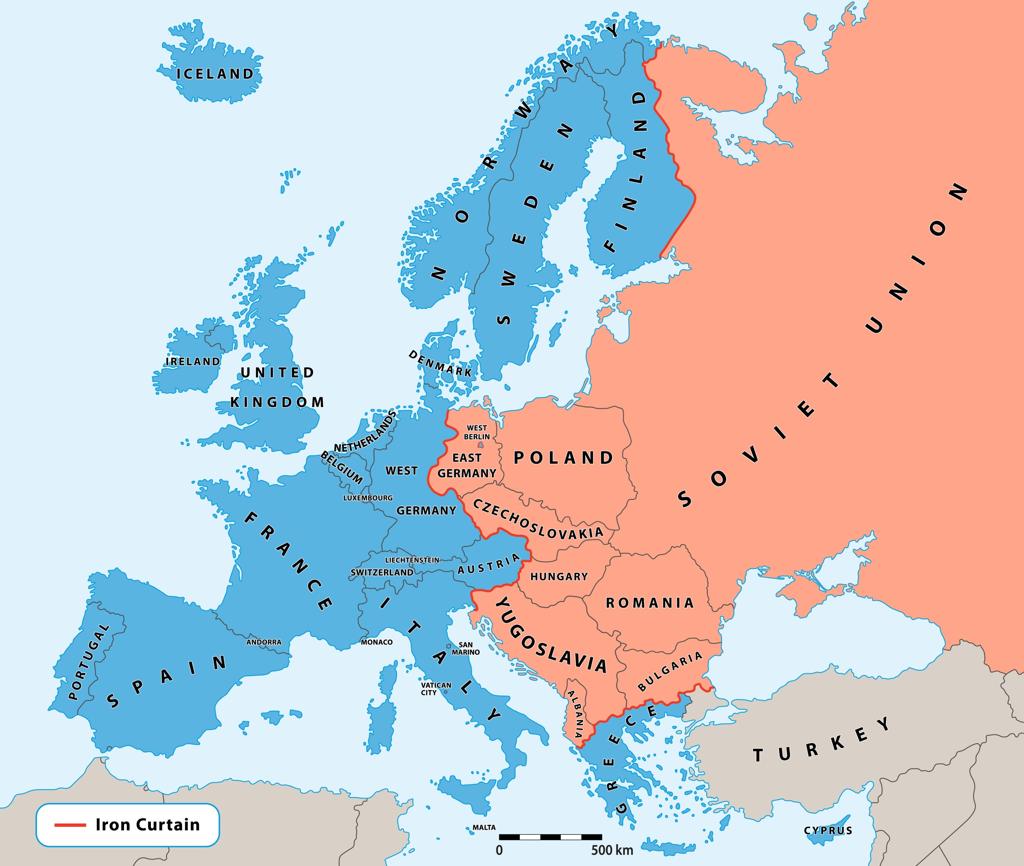
When the Second World War ended in 1945, Europe was liberated from Nazi rule but not reunited. Soviet forces occupied much of Central and Eastern Europe. Communist parties, supported or controlled by Moscow to differing degrees, consolidated power in Poland, East Germany, Czechoslovakia, Hungary, Romania and Bulgaria. Yugoslavia also became Communist, although it broke with Stalin in 1948 and followed a more independent course.
The phrase “Iron Curtain” described more than a line on a map. It was a political, ideological and increasingly physical barrier. Border zones acquired fences, patrols, watchtowers and elaborate controls. Western visitors could sometimes enter, but movement, books, money and contacts were watched. The creation of the Warsaw Pact in 1955 formalised the Soviet-led military bloc at the very moment Andrew was beginning to look eastward.
Religious policy was not identical in every country or every decade. It is therefore misleading to say that all Christianity was simply illegal everywhere. Some registered churches remained open; some historic denominations were tolerated under strict conditions; and certain leaders found ways to negotiate with the state. Yet Communist governments generally promoted atheism and treated religious institutions—especially independent ones with foreign connections—as potential rivals.
Officials could decide who entered seminary, what could be printed, which meetings were authorised and whether children could receive religious instruction. Secret police cultivated informants. Pastors could be interrogated, removed, imprisoned or pressured into cooperation. Congregations outside the recognised system met discreetly in apartments, farms, forests or private homes. Access to Bibles varied, but printing and importing Scripture was restricted enough that one congregation might share a few worn copies among many people.
The shortage was not only material. Isolation made believers wonder whether Christians elsewhere knew they existed. A visitor who arrived, listened and returned was itself a sign that they had not been forgotten.
2. The Young Dutchman God Called
He was born Anne van der Bijl on 11 May 1928 in Sint Pancras, a village in North Holland. “Anne” is a male Frisian name, but later English-speaking readers often knew only his adopted ministry identity. His childhood was marked by economic difficulty and then occupation. Germany invaded the Netherlands in 1940, bringing his formal schooling to an end after the sixth grade.
After the war, he enlisted in the Dutch army and was sent to Indonesia during the violent struggle that followed Indonesia's declaration of independence. Open Doors' official biography says he received commando training. Whatever ideas of adventure the young soldier carried were broken by combat and by what he witnessed. A bullet shattered his ankle and ended his military career.
During recovery in a Catholic hospital, he began reading the Bible. The injury that seemed to close one future opened a deeper crisis: what would he do with his life, and what did obedience to Christ require? Back in the Netherlands, he committed himself to follow God wherever that led.
He then spent two years at the Worldwide Evangelization Crusade missionary training school in Glasgow. By the standards of elite institutions, his preparation was modest. He had little money, no government influence and no organisation behind him. What he possessed was growing familiarity with Scripture, practical resourcefulness and an unusual willingness to go where a need became visible.
At the college, a magazine promoting socialism drew his attention to a youth festival in Warsaw. Standing before a world map, he also noticed how much territory was coloured as Communist—and how few visitors from those countries appeared at a missionary school in the West. The silence on the map began to feel like an invitation.
3. The Trip That Changed Everything
On 15 July 1955, Andrew travelled with a Dutch delegation to the World Youth Congress in Warsaw, Poland. The event was Communist-sponsored, but he had written openly that he was a Christian and would behave as one. He packed Scriptures in his suitcase.
What he found altered the direction of his life. In later interviews he remembered “suffering churches” without enough young people, leadership or Bibles. He met Christians who were not the extinct remnant Western assumptions had led him to expect. They were living communities, constrained but persistent.
The need for Scripture became personal. A Bible was not merely a symbolic protest against Communism. It was a working tool for pastors with limited training, for families teaching children, and for congregations trying to remain rooted in their faith while public culture insisted that religion belonged to the past.
Open Doors dates its beginning to this journey. Andrew distributed the literature he had brought, but more importantly, he returned. During the next two years he spent more than ten weeks behind the Iron Curtain. Between 1955 and 1967, he travelled repeatedly through Eastern Europe, delivering books, encouraging Christians and recruiting others.
Requests multiplied. In a 1995 interview with Christianity Today, Andrew said he had not begun with an ambition to become a smuggler. He first went to evangelise and teach. Pastors asked him to bring a Bible on his next visit. Soon, there were too many requests to carry the books openly. The famous method grew from relationship, not from the desire to perform a daring exploit.
4. The Volkswagen Full of Bibles
In 1957, Andrew received a blue Volkswagen Beetle. The car became inseparable from the public memory of his early ministry. It was small, mechanically simple and inconspicuous enough to look like an ordinary European traveller's vehicle. Compared with a suitcase, it could also carry a substantial load.
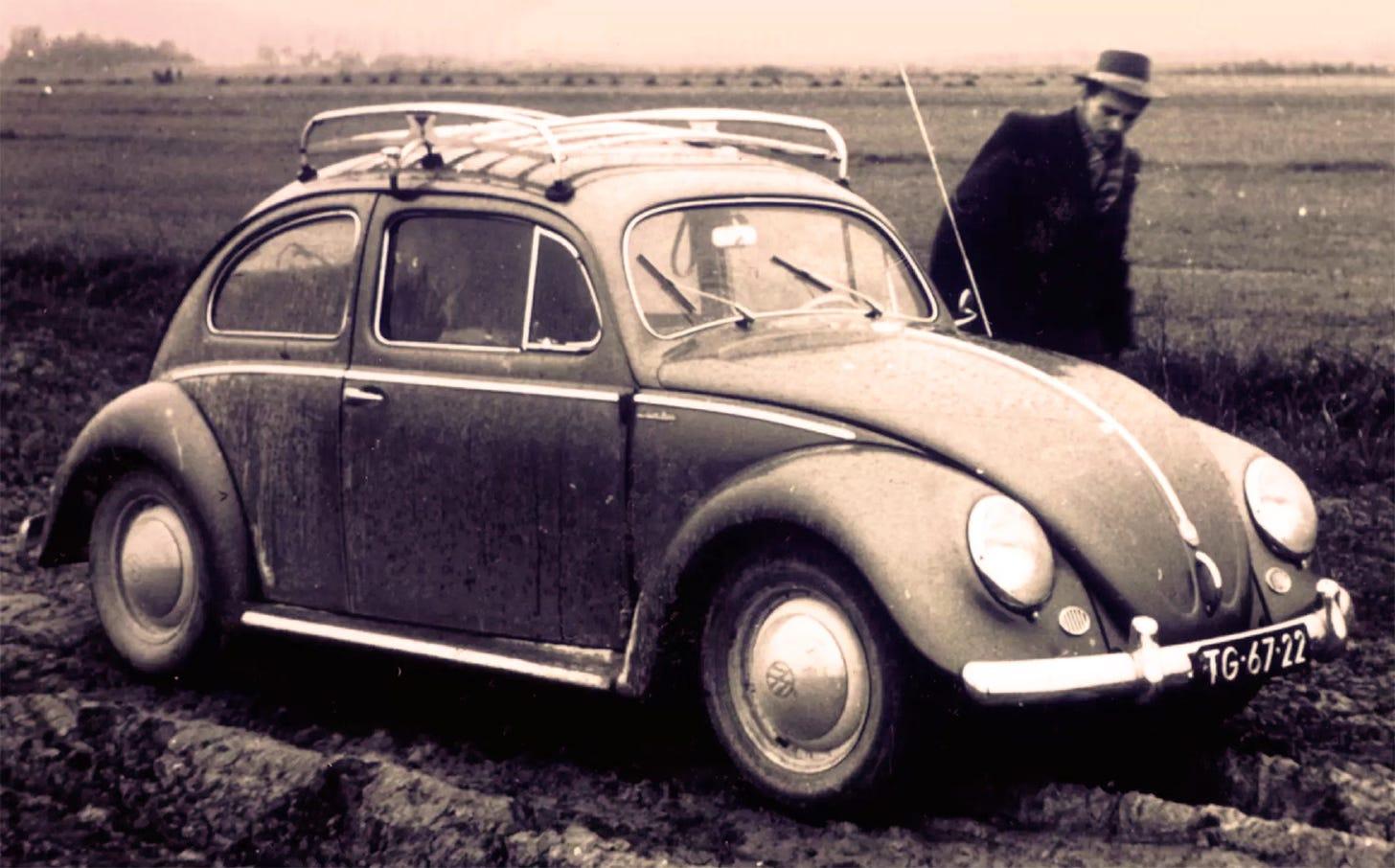
Early shipments were often less sophisticated than legend suggests. Literature might be packed with luggage or placed in the car in quantities that made discovery entirely possible. As the ministry grew, teams developed more specialised vehicles and concealed compartments. Andrew later told Christianity Today that Open Doors established rules: its workers would not lie, would not sell the books and would make no profit.
Preparation involved far more than packing. Travellers needed passports, visas, plausible itineraries, current knowledge of border procedures and trusted contacts who would not be unnecessarily exposed. They had to decide which languages and materials were most useful. A Bible delivered to the wrong place could endanger both recipient and courier.
The risks were not imaginary. Officials could confiscate literature, refuse entry, cancel a visa, question the traveller or alert security agencies. Recipients could face surveillance after a visit. The most dangerous information was sometimes not the books but the names and addresses connecting a foreigner to an underground network.
Andrew's car was never magic. Its significance lay in what it represented: an ordinary object placed at the service of a difficult assignment.
5. Border Crossings: Prayer at the Barrier
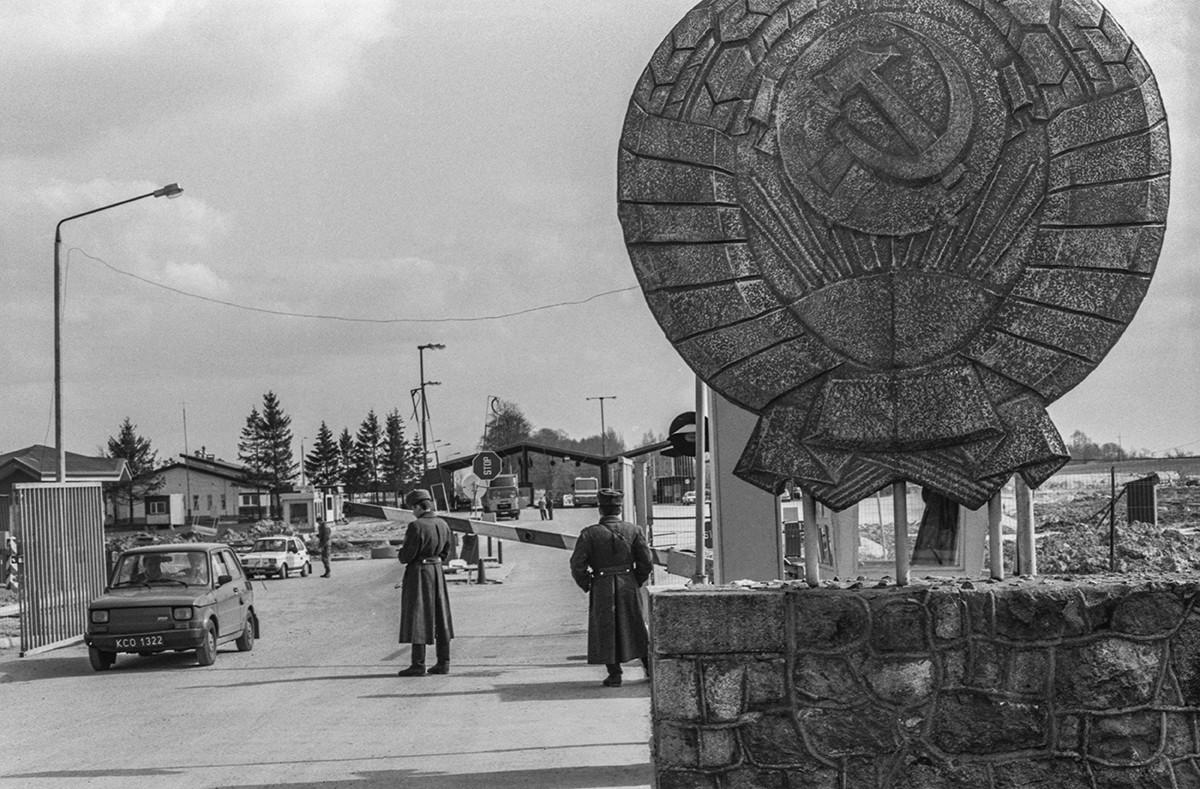
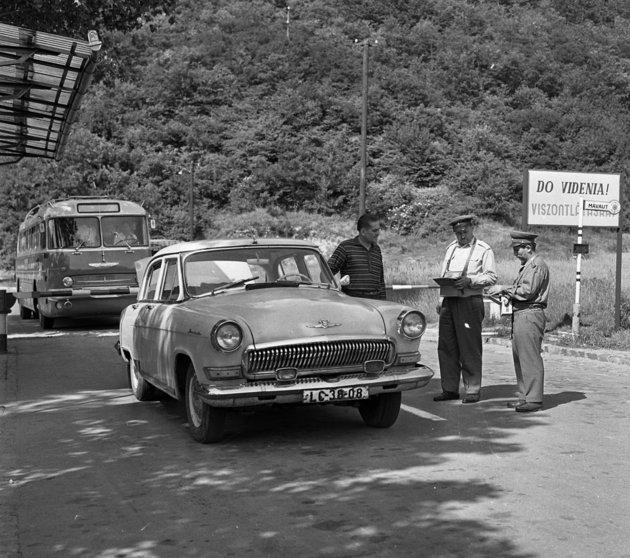
The best-known episodes in God's Smuggler occur at borders. Andrew approaches a checkpoint, sees guards searching vehicles and knows his cargo can be discovered. He prays words remembered in slightly different forms:
“Lord, You made blind eyes see. Please make seeing eyes blind.”
According to Andrew's memoir and Open Doors' retelling, guards sometimes inspected the car yet overlooked the Bibles. On other occasions they searched only part of the vehicle or waved him through after a delay. Readers have repeated these scenes for generations because they bring the tension of faith into a single visible moment: books, guards, a barrier and a prayer.
Historical care matters here. The border prayer is well documented as Andrew's own testimony. Open Doors coworkers preserved and repeated it, and the broader ministry is independently undeniable. But secret operations rarely produced neutral observers or complete official records. We should not claim that every guard's movement in every crossing has been independently reconstructed by historians.
What can be said with confidence is that Andrew repeatedly crossed controlled frontiers with prohibited or restricted literature; Christians received the material; government agencies monitored his work; and the network expanded despite that scrutiny. Open Doors says that after the Iron Curtain fell, Andrew obtained more than 150 pages of East German Stasi files about operations in Eastern Europe and the Soviet Union. The files demonstrated that the authorities knew a great deal about him, even though they had not stopped the ministry.
His own recollections also correct the fearless image. In a later interview, he described reaching the Hungarian border alone with a car full of Bibles and becoming so frightened that he turned around. Six miles back, he found a small hotel and prayed and fasted. Then he returned to the road. Fear did not vanish completely. His conclusion was plain:
“Courage requires persevering, despite your fear. There's no courage without fear.”
That memory is important because it changes the scene. Andrew was not a man incapable of imagining prison or failure. He knew enough to turn the car around. Courage appeared when he went back.
Border work could involve long waits in overheated offices or cold inspection lanes, repeated questions about destinations, the removal of luggage, examination of panels, and the uncertainty of whether a guard's curiosity was routine or informed by intelligence. A traveller could not know whether the next question would be casual, suspicious or decisive.
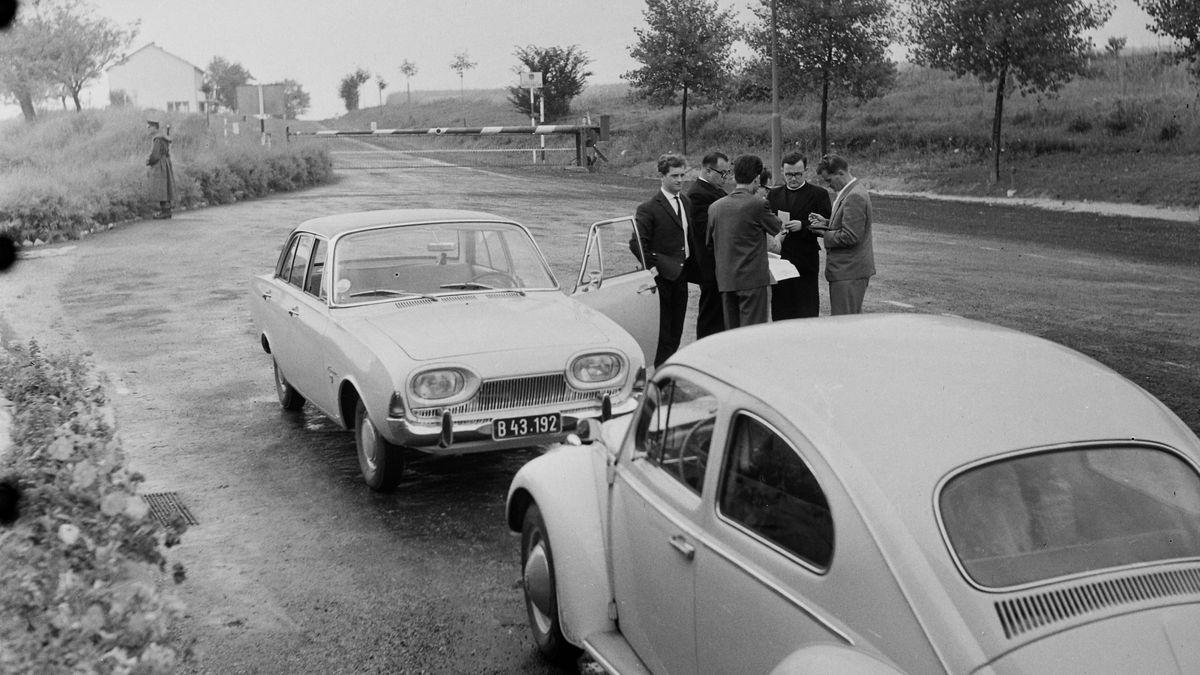
The prayer was therefore not a formula guaranteeing an easy crossing. It was an act of dependence at the point where preparation ended and control belonged to someone else.
6. When Things Did Not Go Smoothly
Retellings often assemble only the successful crossings, giving the impression that every border opened on command. The reality of clandestine ministry was less tidy. Andrew and the teams that followed experienced delays, suspicious questioning, rejected plans, confiscated material and routes that had to be abandoned or changed.
Specific failures are harder to narrate than celebrated successes because underground organisations intentionally limited records. Publishing the details of a compromised route could expose local partners. Names were changed, reports were delayed, and some incidents remained within the operational memory of the ministry.
Even Andrew's recollection of Hungary begins with retreat. His Warsaw journey began with uncertainty rather than a detailed master plan. Money was often insufficient. In one later interview, he remembered planning a three-week Yugoslavian trip when he and his wife Corry had only a small amount between them. They divided it, and he left without knowing how the journey would be funded.
Authorities also learned. Once a foreign visitor became known, a familiar vehicle or travel pattern could become a liability. Teams needed new drivers, vehicles, storage methods and routes. Some couriers were refused entry. Literature could be seized. A failed delivery meant more than lost books: believers waiting at the other end might have taken risks for a meeting that never happened.
Nor did successful delivery end the difficulty. Local Christians still lived under the system after the visitor drove home. Wise service required resisting the temptation to create a dramatic moment at someone else's expense.
This is why Andrew's story should not be reduced to supernatural ease. Faith did not eliminate bureaucracy, fear, surveillance or failure. It produced perseverance, learning and renewed attempts. He later admitted that he made many mistakes and sometimes contemplated when he should have acted. His lesson was not that mistakes do not matter, but that fear of mistakes must not become an excuse for doing nothing.
7. Countries Served Behind the Iron Curtain
Precise trip-by-trip dates are not always publicly available, partly because the work depended upon secrecy. The table below summarises the principal countries consistently associated with Andrew's Eastern European ministry and the conditions couriers encountered. Approximate periods describe the early Cold War phase, not every later Open Doors operation.
| Country | Purpose | Challenges | Approximate period |
|---|---|---|---|
| Poland | Initial contacts, encouragement and Scripture distribution | State control of church life, restricted publishing and surveillance | From 1955 |
| Yugoslavia | Visit churches, carry literature and build contacts | Independent Communist system, regional differences and security attention | Mid-to-late 1950s onward |
| Czechoslovakia | Supply restricted Christian literature and support believers | Strict border controls, secret-police monitoring and pressure on clergy | Late 1950s–1960s |
| Romania | Deliver Bibles and resources to Orthodox, Catholic and evangelical believers | Import restrictions, informants, censorship and pressure on unregistered activity | Late 1950s–1960s |
| Bulgaria | Encourage isolated Christians and supply literature | Highly controlled religious institutions and guarded southern frontier | Late 1950s–1960s |
| East Germany | Maintain contacts and support Christian networks | Stasi surveillance, informants and fortified borders | 1950s–1960s and later network work |
| Soviet Union | Reach churches with Scriptures, training materials and encouragement | Vast distances, KGB attention, severe import controls and risk to local contacts | 1960s and later |
8. From One Driver to Open Doors
A ministry built around one recognisable driver could not remain secure or meet the scale of the need. Andrew recruited others. Teams learned languages, assessed requests, prepared literature, raised funds and developed distribution networks. Cars became fleets; individual deliveries were joined by printing, training, advocacy and practical support.
The publication of God's Smuggler in 1967 transformed the work. Open Doors reports that more than ten million copies were distributed in at least 35 languages. The book inspired volunteers and donors, but fame introduced a paradox. Publicity recruited help while making its central figure easier for authorities to recognise. Andrew increasingly became an advocate and recruiter while others conducted operations that could no longer safely carry his face.
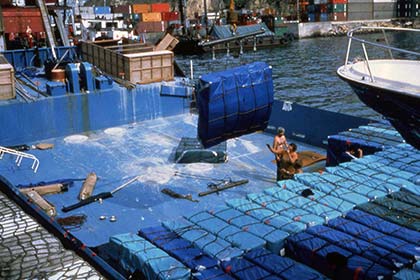
The vision moved beyond Europe. Andrew visited China in 1965, shortly before the Cultural Revolution. In 1975, Open Doors convened more than 400 mission leaders at the Love China conference in Manila. Six years later, Project Pearl delivered one million Chinese Bibles in a single night to a secluded beach, where thousands of Christians helped move the load inland.
Andrew also travelled through Africa, Latin America and the Middle East. He visited Uganda during Idi Amin's rule, war-torn Lebanon during the 1980s and leaders on opposing sides of Middle Eastern conflicts. His approach matured from getting literature across a border to strengthening the whole life of a pressured church.
Today, Open Doors combines Bible and literature distribution with theological education, trauma care, emergency aid, livelihood support, advocacy and research. Country counts vary by year and national office, but official histories describe work in more than seventy countries. The method changed; the central question did not: what do local Christians need in order to remain present and faithful?
9. Separating History from Legend
Was Brother Andrew a real person who carried Bibles into Communist countries? Yes. Did his journeys contribute to an enduring international ministry? Yes. Did Communist security agencies monitor the work? Yes; the surviving Stasi material is one striking confirmation. Were every inspection and miraculous escape independently observed and documented? No.
The distinction does not require cynicism. God's Smuggler is an autobiography written with John and Elizabeth Sherrill. It presents Andrew's remembered experience in a dramatic narrative form. Autobiography is a primary source for what a person says he experienced, but it is not the same as a customs archive, contemporary diary and independent witness all agreeing on every detail.
Open Doors' accounts come from the ministry shaped by Andrew and are therefore not disinterested academic histories. They remain valuable for dates, institutional memory, coworkers' testimony and Andrew's own words. Independent interviews, published profiles and government surveillance records strengthen the broad historical picture.
Secrecy creates unavoidable gaps. Couriers protected names. Recipients could not safely publish photographs. Authorities did not issue certificates admitting that contraband had passed unnoticed. Failed operations might disappear from public reports while successful ones were remembered.
The responsible conclusion is neither “every detail is independently proven” nor “nothing can be trusted.” The border miracles should be introduced as incidents reported by Brother Andrew and preserved in ministry testimony. The sustained distribution network, the growth of Open Doors and the communities it served stand on much wider evidence.
10. A Chronological Timeline
- 1928: Anne van der Bijl is born on 11 May in Sint Pancras, the Netherlands.
- 1940: German occupation interrupts his formal schooling.
- Late 1940s: He serves in the Dutch army in Indonesia; a bullet shatters his ankle.
- Early 1950s: During recovery he reads the Bible, commits his life to Christ and later trains for two years at the WEC school in Glasgow.
- 15 July 1955: He travels to Warsaw and encounters churches cut off from adequate Scripture supplies. Open Doors dates its beginning to this journey.
- 1957: He receives the blue Volkswagen Beetle associated with his early deliveries.
- 1955–1967: Repeated journeys carry literature and encouragement through Eastern Europe and into the Soviet sphere.
- 1965: He makes his first visit to China.
- 1967: God's Smuggler is published and brings worldwide attention and recruits to the work.
- 1975: Open Doors organises the Love China conference in Manila.
- 1977–1978: Andrew visits Uganda and Open Doors holds the Love Africa conference in Malawi.
- 18 June 1981: Project Pearl lands one million Bibles on the Chinese coast in one night.
- 1980s: He makes repeated visits to war-torn Lebanon and expands bridge-building work in the Middle East.
- 1989: The Berlin Wall falls; the political world that produced the original ministry changes dramatically.
- 1993: Queen Beatrix knights him in the Netherlands; he also establishes contact with Hamas leaders deported to southern Lebanon.
- 1997: He receives the World Evangelical Fellowship Religious Liberty Award.
- 2004: Light Force, recounting his Middle Eastern work, is published.
- 2018: His wife, Corry, dies.
- 27 September 2022: Brother Andrew dies peacefully at age 94, survived by five children and eleven grandchildren.
11. Brother Andrew in His Own Words
Short, verifiable statements from interviews reveal a man less interested in personal legend than in action, service and faithfulness:
“You can get in anywhere if you go to serve.”
“The greatest mistake is if you do nothing.”
“We have substituted the word ‘faithful’ with success and prosperity.”
“I don't want them to remember me!... Whom do we carry in? Jesus should have all the attention.”
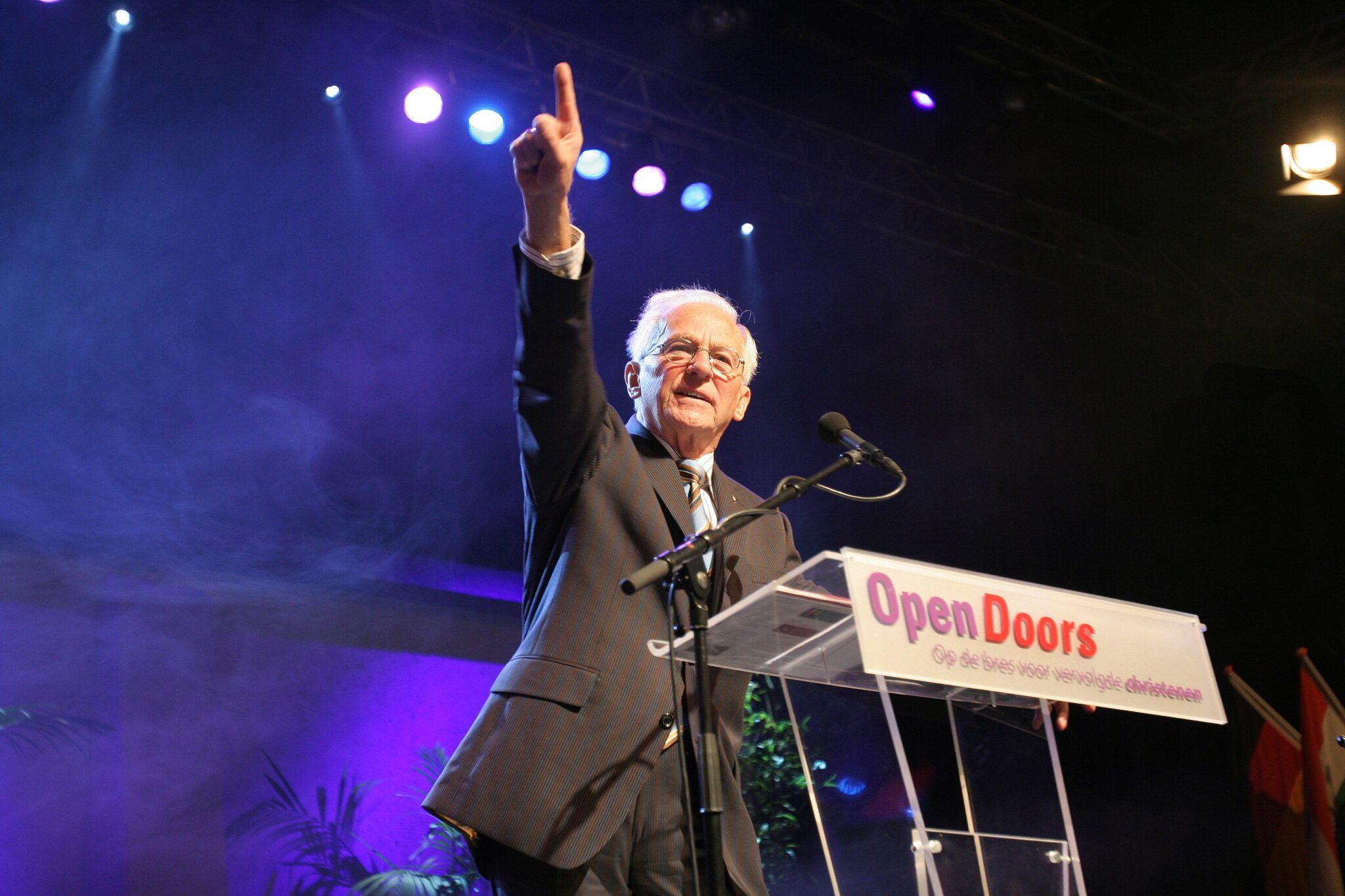
These quotations come from Open Doors interviews and memorial material. They also explain his discomfort with celebrity. In 1995 he called the heroic image created by God's Smuggler a burden because he believed ordinary Christians should help suffering believers without imagining that such service belonged to an exceptional class.
12. Lasting Legacy
Brother Andrew helped change the imagination of modern missions. He forced Western churches to see Christians under Communist government not as distant victims but as members of the same body—people with courage, insight and needs that should shape the response.
He also helped establish a practical model for persecuted-church ministry: begin by listening to local believers; supply what strengthens their witness; protect their agency; prepare them for pressure rather than promising escape from it; and mobilise the wider church to pray and act.
Bible distribution remains central to that legacy, but the deepest effect cannot be counted only in copies. A delivered Bible could equip a pastor, anchor a family and be copied or shared through a network. A visit could tell an isolated congregation that it had not disappeared from the world's concern.
Open Doors became larger than its founder, exactly as a healthy mission must. The organisation now has national offices, researchers, trainers, relief teams, advocates and local partners. Its annual World Watch List has made the conditions facing Christians in restrictive countries part of global public discussion.
Andrew's later work also complicated the easy “West versus East” story. After Communism receded in Europe, he did not retire. He went toward new barriers—in Africa, Asia, Latin America and the Muslim world. He believed doors described as closed were often invitations to serve more humbly and creatively.
13. Lessons History Leaves Us
The first lesson is that history often turns on an ordinary person who pays attention. Andrew had no international platform when he went to Warsaw. He saw believers others had overlooked and allowed their need to rearrange his life.
Second, courage and fear can occupy the same car. His admission that he turned away from the Hungarian border before returning is more useful than a flawless legend. Courage was perseverance, not emotional invulnerability.
Third, love for God's Word becomes visible in what people sacrifice to receive, carry, translate, print and share it. The Bible shortage behind the Iron Curtain exposed how casually Christians with abundant access can treat the same gift.
Fourth, faithfulness is larger than one celebrated person. The story required donors, mechanics, couriers, translators, safe-house hosts, printers and believers who accepted deliveries at far greater long-term risk than the visitor. Open Doors endured because the assignment became shared.
Finally, honest history strengthens rather than weakens the lesson. We do not need to inflate every story. The documented scale of the ministry is remarkable; the memoir can be honoured as testimony; uncertainties can be named; and the courage of the persecuted church can remain at the centre.
14. Connection to the SOAR Devotional
The companion devotional “God's Smuggler” draws one central lesson from this history:
Faith obeys God even when the risks are great.
Its main Scripture is Acts 5:29: “We ought to obey God rather than men.” Brother Andrew's story does not teach that believers should seek danger or treat wisdom lightly. It shows what can happen when a clear need, a settled conviction and practical obedience meet at a difficult border.
The historical record is larger and more complicated than one miraculous checkpoint. There were fears, mistakes, delays, changing methods and thousands of less-visible participants. Yet through all of them runs the same question posed by the devotional: when obedience becomes costly, whose voice will carry the greatest weight?
Read the SOAR devotional: God's Smuggler
Sources and Further Reading
- Brother Andrew with John and Elizabeth Sherrill, God's Smuggler (first published 1967).
- Open Doors: Brother Andrew Biography.
- Open Doors: Our History.
- Open Doors UK: Brother Andrew in His Own Words.
- Christianity Today: “God's Smuggler Confesses” (1995 interview).
- Pew Research Center: Religion in Central and Eastern Europe.
- Oxford Handbook: “Religion and the Cold War in Europe”.