Behind the Story: Apollo 13 — From Moon Mission to Fight for Survival
Finding voices available in your browser…

The documented history of Apollo 13, from its lunar objective and hidden oxygen-tank failure to the improvised systems, teamwork and procedures that brought all three astronauts home.
Apollo 13 is often remembered through a single sentence, a damaged spacecraft and three astronauts who made it home. The complete history is even more revealing.
The rescue depended on years of preparation, decisions made under pressure, equipment used for purposes it had never been designed to serve and thousands of people solving one problem after another without the possibility of sending help from Earth.
It also began with a hidden chain of technical failures that reached back years before launch.
This is the documented history behind the SOAR devotional “The Moon Mission That Became a Fight for Survival.”
1. The Third Lunar Landing
By April 1970, NASA had already placed astronauts on the Moon twice. Apollo 11 achieved the first landing in July 1969, and Apollo 12 followed in November. Public attention had begun to decline, but Apollo 13 was not intended to be a repetition of those missions.
Commander James A. Lovell Jr. and Lunar Module Pilot Fred W. Haise Jr. were scheduled to land near the Moon's Fra Mauro formation, a geologically important highland region. Command Module Pilot Thomas K. “Ken” Mattingly would remain in lunar orbit aboard the Command Module Odyssey.
The landing crew planned two extended moonwalks. They would deploy scientific instruments, collect rocks and study terrain believed to contain material thrown out by the formation of the enormous Imbrium basin.
Apollo 13 therefore began as a mission of exploration. Its destination, equipment and experiments had been selected for work on another world.
2. A Crew Change Seventy-Two Hours Before Launch
Only days before liftoff, backup Lunar Module Pilot Charles Duke became ill with rubella, commonly called German measles. Because members of the prime and backup crews had trained together, NASA doctors evaluated who might have been exposed.
Lovell and Haise were considered immune. Mattingly was not.
NASA managers removed Mattingly from the flight approximately 72 hours before launch, even though he never developed the illness. Backup Command Module Pilot John L. “Jack” Swigert Jr. took his place.
Swigert was highly trained, but the substitution forced the newly configured crew to rehearse critical procedures during the final days. The change later became one of the mission's striking ironies: Mattingly remained on Earth and assisted the wider effort to develop procedures for bringing his crewmates home.
3. Launch Day—and an Early Warning
At 2:13 p.m. Eastern Standard Time on 11 April 1970, the Saturn V carrying Apollo 13 lifted off from Launch Complex 39A at Kennedy Space Center.
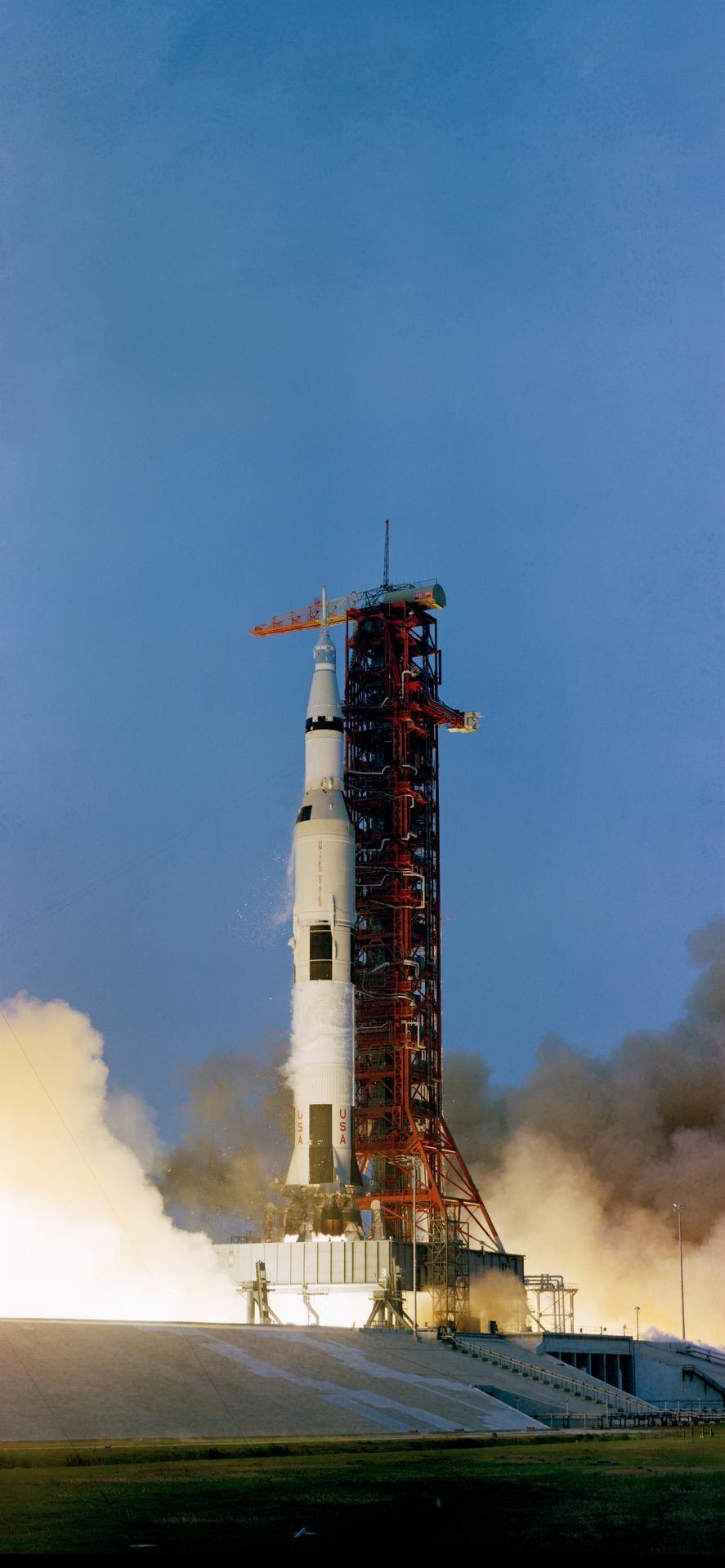
The ascent produced an unexpected problem. The centre engine of the Saturn V's second stage shut down roughly two minutes early after severe oscillations caused the engine's control system to protect itself. The remaining engines burned longer, and the third stage also extended its burn. The spacecraft still reached the required orbit.
The launch vehicle had compensated successfully. Mission Control found no reason to end the mission.
Apollo 13 left Earth orbit and headed toward the Moon.
4. The Mission That Television Almost Ignored
During the first two days, the flight appeared largely normal. The crew performed navigation checks, transferred into the Lunar Module Aquarius, inspected equipment and prepared for the planned landing.
On the evening of 13 April, the astronauts transmitted a television programme showing life inside the spacecraft. Major American television networks did not carry it live nationally. Lunar flight no longer seemed as extraordinary as it had during Apollo 8 or Apollo 11.
Within minutes, the world would begin paying attention.
Mission Control asked Swigert to activate the fans that stirred the super-cold oxygen inside the Service Module's storage tanks. This was a routine procedure intended to produce accurate quantity readings.
At approximately 55 hours, 54 minutes and 53 seconds after launch, electrical current reached damaged wiring inside oxygen tank number 2.
The tank exploded.
5. “We've Had a Problem”
The astronauts heard a loud bang and felt the spacecraft shake. Warning lights appeared. At first, nobody knew whether the Lunar Module had been struck, a valve had opened or an electrical problem had occurred.
Swigert called Mission Control:
“Okay, Houston, we've had a problem here.”
After the capsule communicator asked him to repeat the message, Lovell reported:
“Houston, we've had a problem. We've had a Main B Bus undervolt.”
The popular wording “Houston, we have a problem” was later fixed in public memory, especially through the 1995 film. The actual transmission used the past tense: “we've had a problem.”
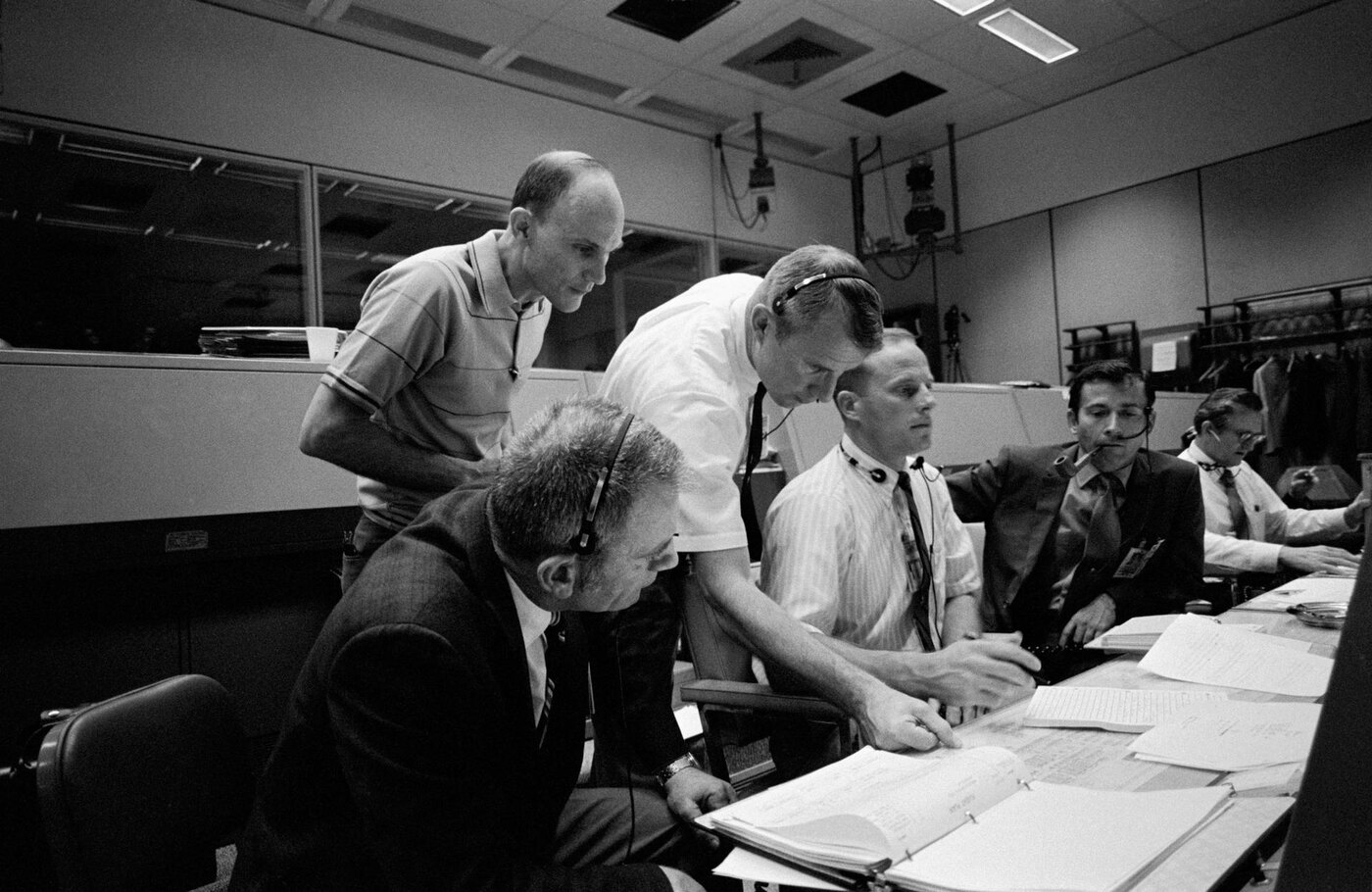
Lovell looked through a window and saw gas escaping into space. Oxygen tank number 2 had failed, and tank number 1 was losing its contents. The spacecraft's fuel cells required oxygen and hydrogen to produce electricity and water. As the oxygen disappeared, electrical power and water production also began to fail.
The problem was no longer a faulty instrument reading.
The Command Module was dying.
6. The Failure Began Years Before the Explosion
The Apollo 13 Review Board later reconstructed an extraordinary chain of events involving the failed tank.
Oxygen tank number 2 had originally been installed on a different spacecraft equipment shelf. During work in 1968, the shelf was accidentally dropped a short distance when a retaining bolt that had not been removed caught the lifting fixture. Investigators concluded that this incident probably damaged or displaced part of the tank's internal filling-and-draining system.
Before the Apollo 13 launch, technicians discovered that the tank would not empty normally during a test. They used its internal heaters to boil off the remaining oxygen. Ground equipment supplied 65 volts, but thermostatic switches inside the tank had not been properly upgraded from an older 28-volt specification.
The switches fused shut. The heaters remained energised for hours, and temperatures inside the tank rose far beyond the intended limit. The tank's temperature gauge could display only up to about 80 degrees Fahrenheit, so the dangerous overheating was not visible to the test team.
The heat damaged Teflon insulation around internal fan wiring. When the crew later switched on the stirring fans in space, an electrical short most probably ignited the damaged insulation. In the oxygen-rich tank, the resulting fire drove pressure upward until the tank failed.
The explosion damaged surrounding systems and blew away part of the Service Module's outer panel. A routine switch had revealed a failure chain created through design assumptions, handling damage, incompatible electrical specifications and incomplete test information.
7. Aquarius Becomes a Lifeboat
The landing was abandoned. Mission Control's new objective was simple to state and extremely difficult to accomplish: keep all three men alive and return them to Earth.
The Command Module's remaining batteries and oxygen had to be preserved for re-entry. Controllers instructed the crew to shut down Odyssey and move into Aquarius.
The Lunar Module had been designed to carry two astronauts from lunar orbit to the Moon's surface and back. It had its own oxygen, batteries, water, guidance computer and descent engine. Nobody had intended it to support three men for most of the journey home.
Yet the separate systems built for a lunar landing now offered the only practical shelter.
The vehicle meant to take two men down to the Moon became the spacecraft that kept three men alive on the way back to Earth.
8. The Long Route Around the Moon
Apollo spacecraft could travel on a “free-return” path that naturally looped around the Moon and came back toward Earth. Earlier in the mission, however, Apollo 13 had performed a course correction that moved it away from that path in preparation for the Fra Mauro landing.
The crew therefore needed the Lunar Module's descent engine to restore a safe return trajectory. A first burn placed the spacecraft back onto a free-return route. After Apollo 13 passed behind the Moon, a longer engine burn shortened the journey and improved the planned landing location.
Using the Lunar Module engine while the Command Module remained attached required procedures that had been studied but never used during an actual emergency of this kind. Controllers had to calculate burns while managing limited electricity, uncertain spacecraft performance and the need to preserve consumables.
Going directly back was impossible. The Moon's gravity became part of the rescue route.
9. Fitting a Square Filter into a Round System
The astronauts had enough lithium hydroxide material to remove carbon dioxide from the cabin air. The problem was compatibility.
The Command Module used square lithium hydroxide canisters. The Lunar Module system accepted round ones. With three men breathing inside Aquarius, carbon-dioxide levels began rising toward danger.
Engineers on Earth gathered only the kinds of materials known to be aboard the spacecraft. They constructed an adapter from a plastic bag, cardboard, a spacesuit hose, tape and other available items. Mission Control then read detailed assembly instructions to the crew.
The improvised device became known as the “mailbox.”
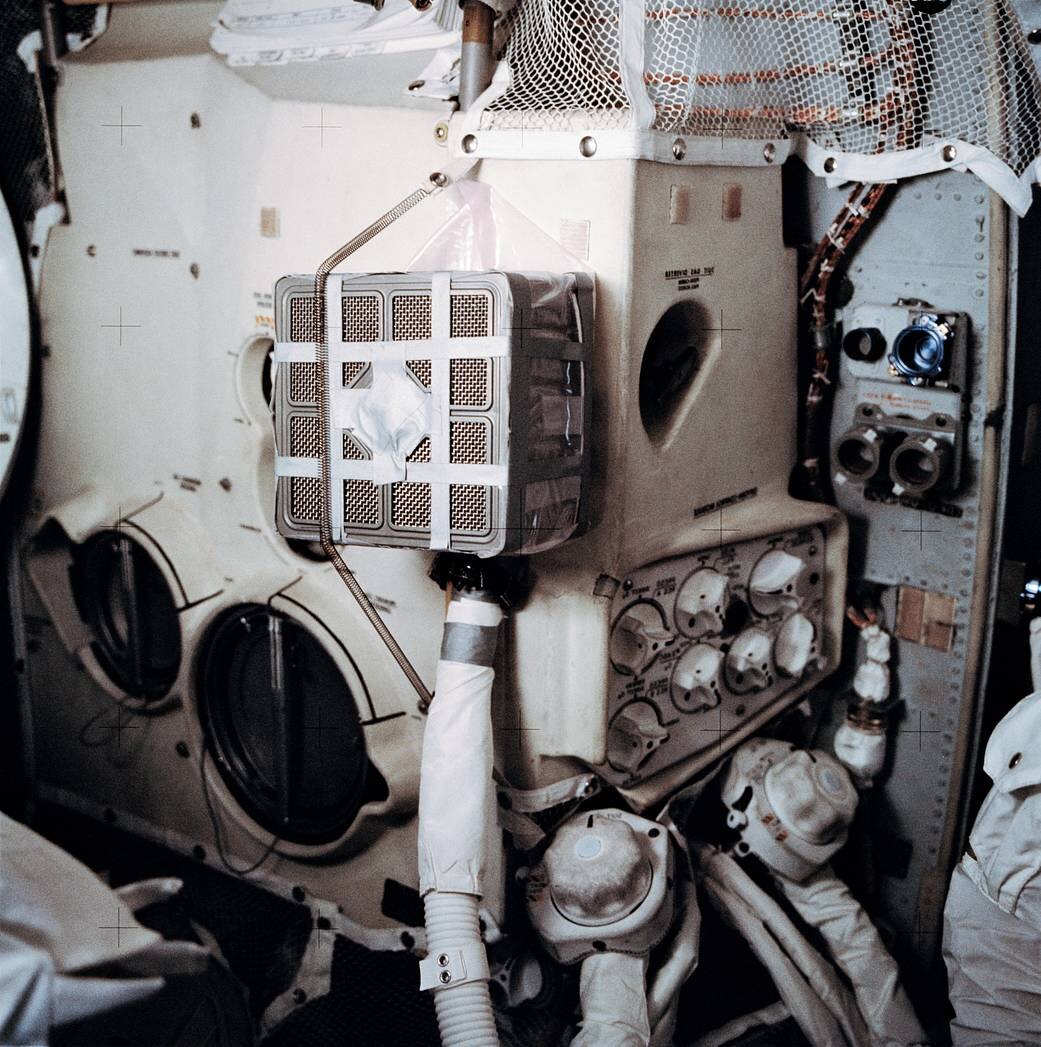
It worked. A life-threatening mismatch between two spacecraft systems was overcome with materials already on board and instructions developed under severe time pressure.
10. Cold, Thirst and Exhaustion
Electricity had to be rationed with extraordinary care. Systems were switched off, cabin heat disappeared and the temperature inside the spacecraft fell to about 38 degrees Fahrenheit—approximately 3 degrees Celsius.
Moisture condensed on the walls. The crew slept poorly in the cold and noise. Water was restricted because it was needed for cooling equipment as well as drinking. Food became difficult to prepare and consume.
Haise developed a fever and a urinary infection during the return. All three astronauts lost weight and became increasingly tired.
The emergency was not solved by one brilliant decision. Survival required repeated discipline: consuming less water, using less electricity, delaying nonessential tasks and following long procedures accurately while cold and exhausted.
11. Navigating Without Normal Power
Debris from the damaged Service Module made normal star sightings difficult. The crew still needed to correct the spacecraft's course so that it would enter Earth's atmosphere within a narrow safe corridor.
For one critical manual burn, Lovell used Earth in the spacecraft window as a visual reference while Haise controlled the pitch and Swigert managed the timing. The astronauts held the planet's illuminated boundary in the guidance markings as the Lunar Module engine fired.
Too shallow an entry could cause the spacecraft to skip away from the atmosphere. Too steep an entry could expose it to destructive heating and forces. Small course errors accumulated over hundreds of thousands of kilometres could become fatal.
The crew and controllers therefore continued adjusting the route even after Apollo 13 was clearly moving toward home.
12. Waking the Frozen Command Module
Odyssey had never been designed to remain powered down in deep space and then be restarted shortly before re-entry. Flight controllers had to create a new activation procedure that used far less electrical energy than the normal sequence.
NASA records note that controllers developed the procedure in about three days instead of the months normally required. Teams on Earth tested steps in simulators while the astronauts prepared to carry them out in space.
The Command Module was cold and wet with condensation. Engineers worried that moisture behind its panels could cause electrical short circuits. They also did not know whether the explosion had damaged the heat shield needed to survive atmospheric entry.
When the crew finally separated the Service Module, they saw the scale of the destruction.
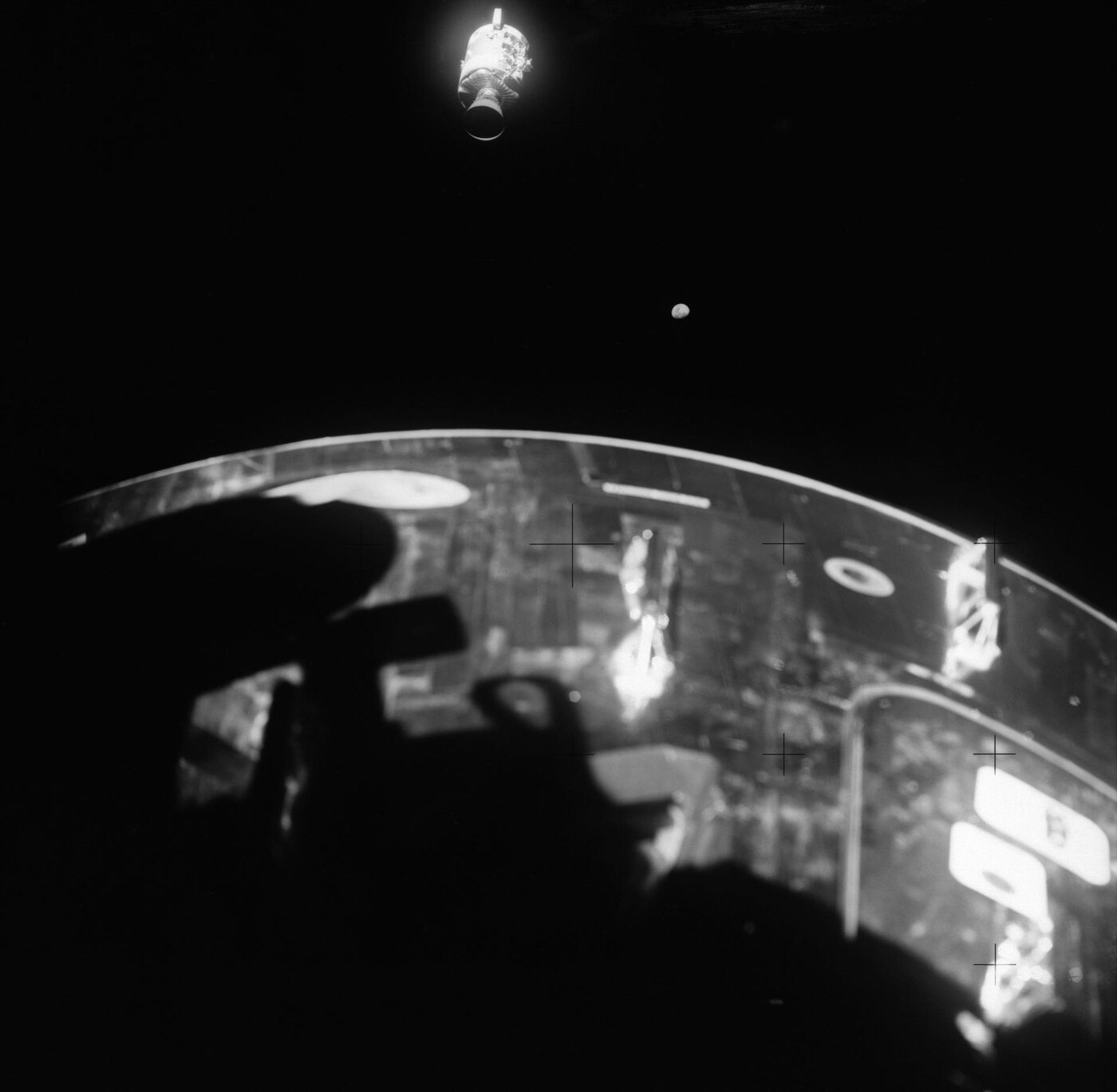
One entire external panel was missing. The damage confirmed how serious the explosion had been, but the condition of the Command Module's heat shield could not be fully inspected.
The crew could only continue.
13. The Final Minutes
Before re-entry, the astronauts transferred back into Odyssey and released the Lunar Module. Aquarius, which had preserved their lives, was not built to survive atmospheric entry.
Radio communication normally disappeared for several minutes as an Apollo capsule passed through ionised gas during re-entry. Apollo 13's communications blackout lasted longer than expected, intensifying the tension in Mission Control and among people following the mission around the world.
Then the spacecraft's signal returned.
At 1:07 p.m. Central Standard Time on 17 April 1970, the Command Module splashed down in the South Pacific Ocean near the recovery ship USS Iwo Jima.
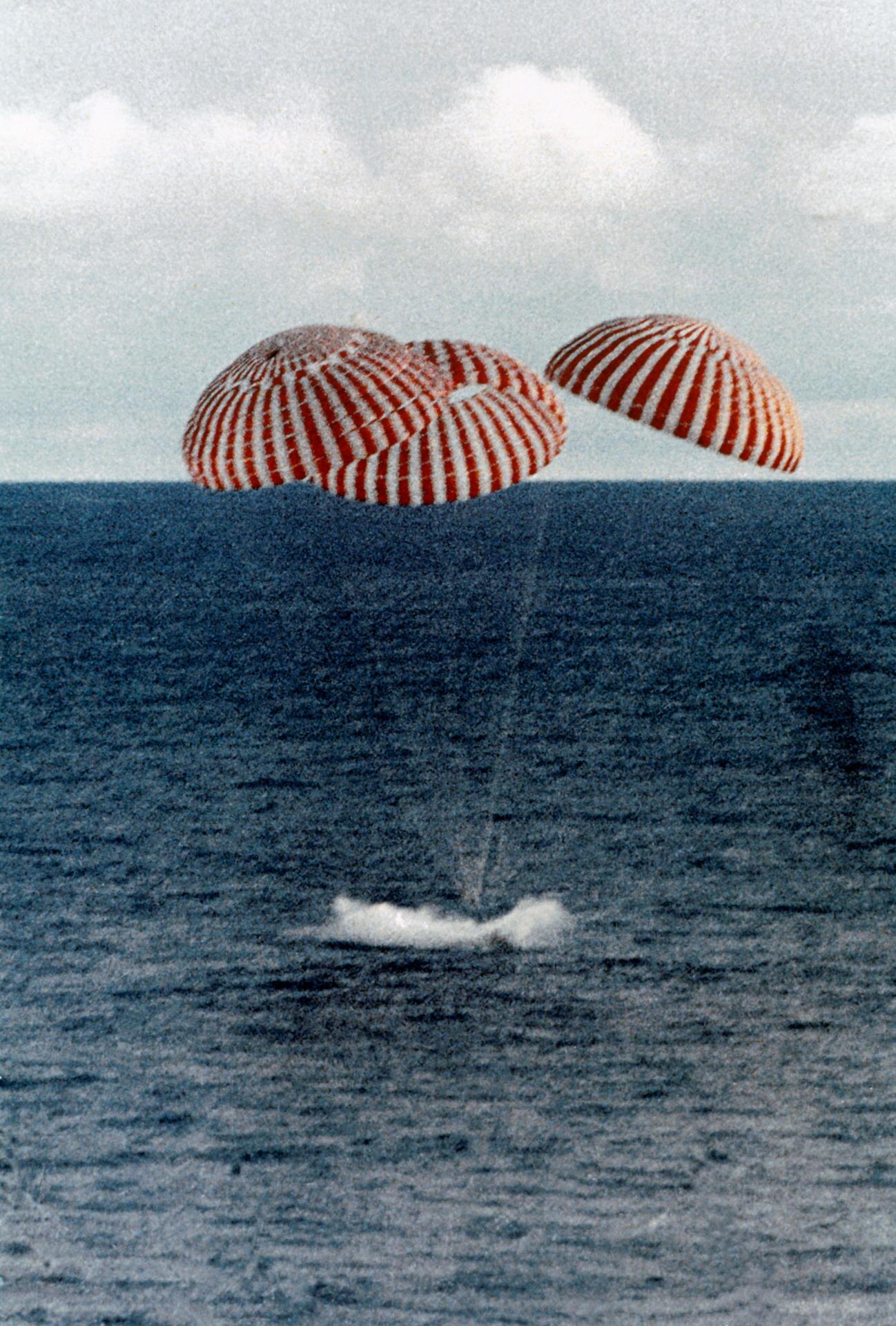
Lovell, Swigert and Haise had spent 142 hours, 54 minutes and 41 seconds in space.
They had not landed on the Moon.
They had all returned alive.
14. What the Investigation Changed
NASA established the Apollo 13 Review Board under Edgar Cortright. After weeks of investigation and testing, the board concluded that an electrically initiated fire in oxygen tank number 2 was the accident's most probable cause.
The review did not treat the explosion as one isolated mistake. It examined design, manufacturing, handling, testing, documentation, voltage compatibility and the effects of the failure on connected systems.
NASA redesigned oxygen tanks for later missions. Fans and vulnerable wiring were removed from future tank configurations, heaters and thermostatic switches were changed, and additional oxygen capacity was provided separately from the fuel-cell system. Procedures, warning systems and testing practices were also reviewed.
Apollo 14 successfully returned to the Fra Mauro region in February 1971.
The destination abandoned by Apollo 13 was reached by another crew, carrying lessons learned from the mission that did not land.
15. Apollo 13 in Seven Revealing Facts
- 72 hours: Jack Swigert joined the prime crew only about three days before launch after Ken Mattingly was removed over rubella exposure.
- 55:54:53: The explosion occurred just under 56 hours after launch.
- Approximately 200,000 miles: The spacecraft was this far from Earth when the crisis developed.
- Two vehicles: The Command Module Odyssey was needed for re-entry, while the Lunar Module Aquarius became the lifeboat.
- 38°F / 3°C: Cabin temperatures fell to roughly this level after most electrical systems were shut down.
- Three days instead of months: Controllers created a new low-power Command Module activation procedure during the emergency.
- Three survivors: Lovell, Swigert and Haise all returned safely on 17 April 1970.
16. A Concise Timeline
- 1968: The oxygen-tank shelf is accidentally dropped during earlier spacecraft work, probably damaging the tank's internal drain system.
- March 1970: Ground testing reveals that oxygen tank number 2 will not empty normally; prolonged heater operation damages internal wire insulation.
- 6–10 April 1970: Rubella exposure leads NASA to replace Ken Mattingly with Jack Swigert.
- 11 April, 2:13 p.m. EST: Apollo 13 launches from Kennedy Space Center.
- 13 April, 55:54:53 mission time: Oxygen tank number 2 explodes after the stirring fans are activated.
- 14 April: The crew powers down the Command Module, uses the Lunar Module as a lifeboat and returns to a free-return trajectory.
- 15 April: The improvised lithium hydroxide “mailbox” controls the dangerous carbon-dioxide buildup.
- 16 April: A manual course-correction burn refines the entry path toward Earth.
- 17 April: The Service Module and Lunar Module are jettisoned; Odyssey re-enters and splashes down safely.
- 15 June 1970: The Apollo 13 Review Board releases its findings.
- February 1971: Apollo 14 lands successfully in the Fra Mauro region.
17. The “Successful Failure”
Apollo 13 is frequently called a “successful failure.” The phrase holds two truths together.
The mission failed to accomplish its assigned lunar landing. Scientific work was lost, equipment was destroyed and the astronauts came close to death. Calling the rescue successful should never erase the seriousness of the accident or the preventable failures that caused it.
Yet the safe return demonstrated the value of preparation, redundancy, honest communication, disciplined teamwork and the ability to redefine success when the original objective became impossible.
Some popular memories come from later retellings. Flight Director Gene Kranz did not say “Failure is not an option” during the actual mission, although the phrase became associated with the rescue through the 1995 film and Kranz's later book. The real transcripts reveal something less polished and more instructive: people exchanging data, questioning assumptions, correcting misunderstandings and working steadily through uncertainty.
No single person rescued Apollo 13.
The crew survived because thousands of individual responsibilities became one coordinated response.
18. Connection to the SOAR Devotional
The companion devotional “The Moon Mission That Became a Fight for Survival” places Apollo 13 beside Paul's storm-tossed voyage in Acts 27.
The historical account does not claim that Apollo 13 was a biblical miracle or that every engineering decision was directed through a specific divine revelation. Its value is found in the parallel: both journeys began with a destination, both were radically altered by crisis and both required the meaning of success to be reconsidered.
Apollo 13 did not reach the Moon. Paul's ship did not reach its intended harbour. The vehicles were damaged or lost, but the people reached safety.
The fuller history strengthens the devotional's central lesson:
A storm may change the journey, but it cannot overthrow God's purpose.
Read the SOAR devotional: The Moon Mission That Became a Fight for Survival
Sources and Further Reading
- NASA: Apollo 13 Mission Overview.
- NASA: Apollo 13 Mission Details.
- NASA Technical Reports Server: Report of the Apollo 13 Review Board.
- NASA Technical Reports Server: Apollo 13 Mission Report.
- NASA: Apollo Lunar and Flight Journals.
- NASA: Apollo 13 Image Gallery.
- Smithsonian National Air and Space Museum: Apollo 13.
- Smithsonian: Conserving the Creativity That Saved the Apollo 13 Astronauts.